Storm-door buying guide · Reviewed September 16, 2026
Storm Door vs. Screen Door
Compare fixed-glass and operating storm doors with screen-only doors, then choose the right 740, 760, or 810 storm-door family.
Choose the job you want the extra door to do
A storm door and a screen door both sit at an entry, but the panel construction changes how the opening works. Start with the way you want to use the primary door: closed with a visible entry behind glass, open with a screened opening, or paired with an operating secondary door. The broad product label is only the beginning of the decision.
In our storm-door catalog, the 760 and 810 are fixed-glass full-view storm doors. The 740 is an operating storm door with a glass kickplate. A screen-only door uses mesh where a fixed-glass storm door uses glazing. Separating them by the actual panel construction is more useful than assuming that every storm door includes a screen or that every screen door accepts glass.
Fixed glass: 760 and 810
The 760 has 3/16-inch clear tempered fixed glass. The 810 has a 5/8-inch fixed insulated glass unit. Both preserve a broad view through the secondary door, but neither base specification describes an opening screen panel. If screened airflow is a must-have feature, a fixed full-view glass door is not the correct starting point.
Choose between these two by glass package and size. Both have 32 x 80 and 36 x 80-inch standard configurations. The 760 permits special-size requests within its listed range; the 810 does not. Low-E and obscure/Low-E requests are reviewed separately for the 810 rather than assumed from the word insulated.
Operating glass: the 740
The 740 uses divided operating sections with 1/8-inch tempered safety glass and a lower glass kickplate. Its visual layout differs from a single full-view pane. It is the family to discuss when you need an operating storm door, with the exact screen arrangement and operation confirmed in the quotation.
Do not equate operating with retractable. A retractable screen, a particular mesh, or an interchangeable seasonal insert is a specific feature that must be documented. Describe how you expect to use the door so the quoted configuration can be checked against that expectation.
When the screen is the main feature
A screen-only door is intended to provide a screened opening while the primary entry door is open. Mesh does not provide the same closed glass layer as a fixed-glass storm door. Some screen-door layouts include a lower panel, so compare the whole assembly rather than judging it from the presence of one glass area.
If you need screened operation as part of a storm door, begin with the 740 and have the specific screen arrangement confirmed. Describe whether you expect daily ventilation or another operating pattern. Do not assume a retractable mechanism or specialty mesh from the word screen.
Compare complete orders, not just labels
Your comparison should list the panel arrangement, glass or mesh, frame finish, included hardware, pre-hung requirement, final dimensions, and delivery terms. Storm-door and screen-door photographs can show similar frame shapes while hiding important differences in panel construction.
Use the product pages for the model specifications and the measuring guide for an opening survey. If you are replacing a damaged unit, include photographs of the entire old door and any identification label. We can review a complete replacement request, but an existing frame does not establish that a new slab or insert will fit it.
Common questions
Does every storm door have a screen?
No. The 760 and 810 listed here have fixed glass. The 740 is an operating family whose screen configuration is confirmed in the quote.
Which storm doors have fixed glass?
The 760 has fixed clear tempered glass, and the 810 has fixed insulated glass. Neither base listing is a screen-ventilation product.
Explore the door families
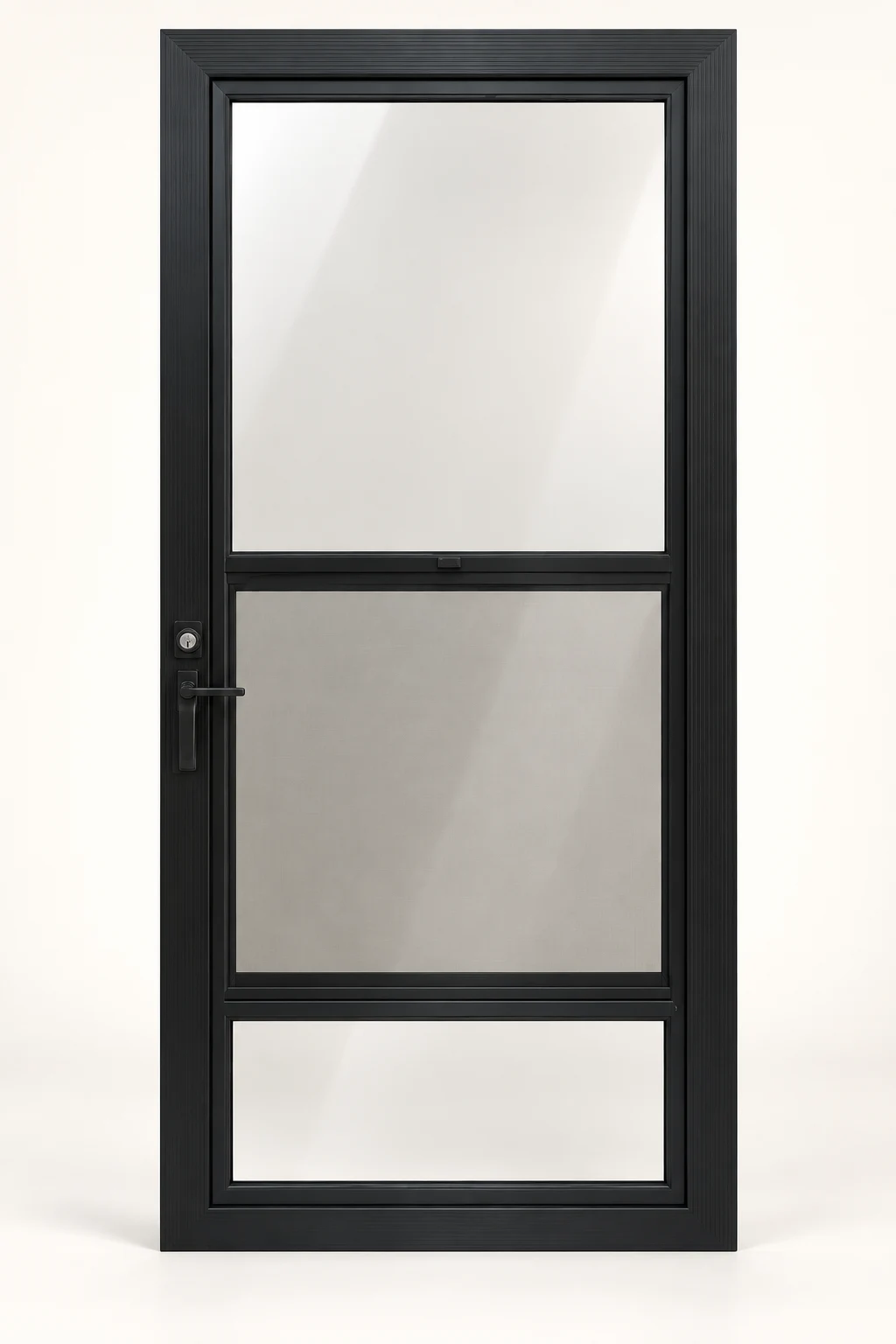
Series 740 · Four finishes
740 Operating Aluminum Storm Door
Aluminum operating storm door with 1/8-inch clear tempered safety glass and glass kickplate. Black lever hardware and a deadbolt are included. Base doors are not pre-hung.
From $766.01
Standard size and included glass. Shipping and tax calculated at checkout.
Choose size & finish →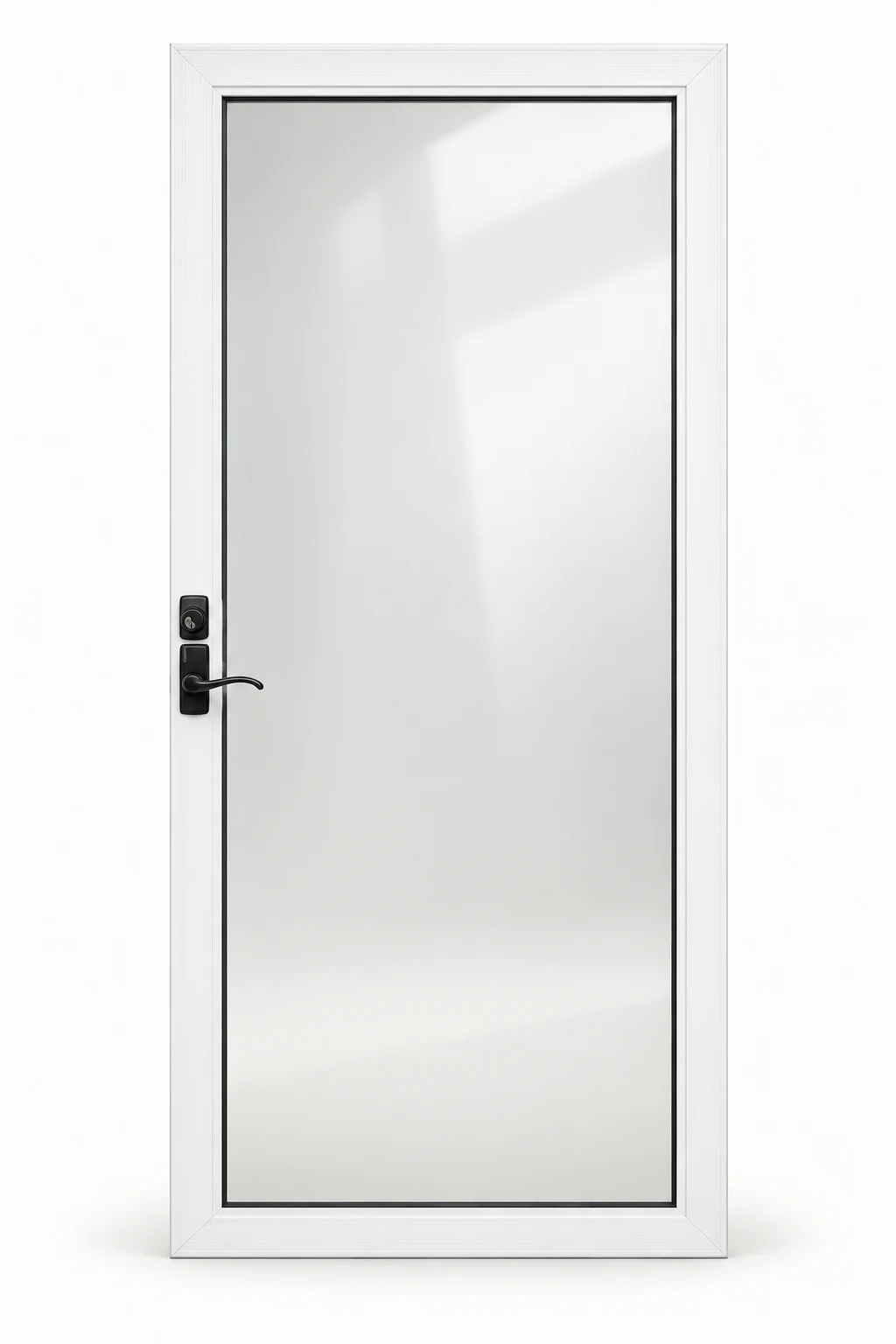
Series 760 · Four finishes
760 Fullview Aluminum Storm Door
Aluminum fullview storm door with 3/16-inch clear tempered fixed glass. Black lever hardware and a deadbolt are included. Base doors are not pre-hung.
From $648.86
Standard size and included glass. Shipping and tax calculated at checkout.
Choose size & finish →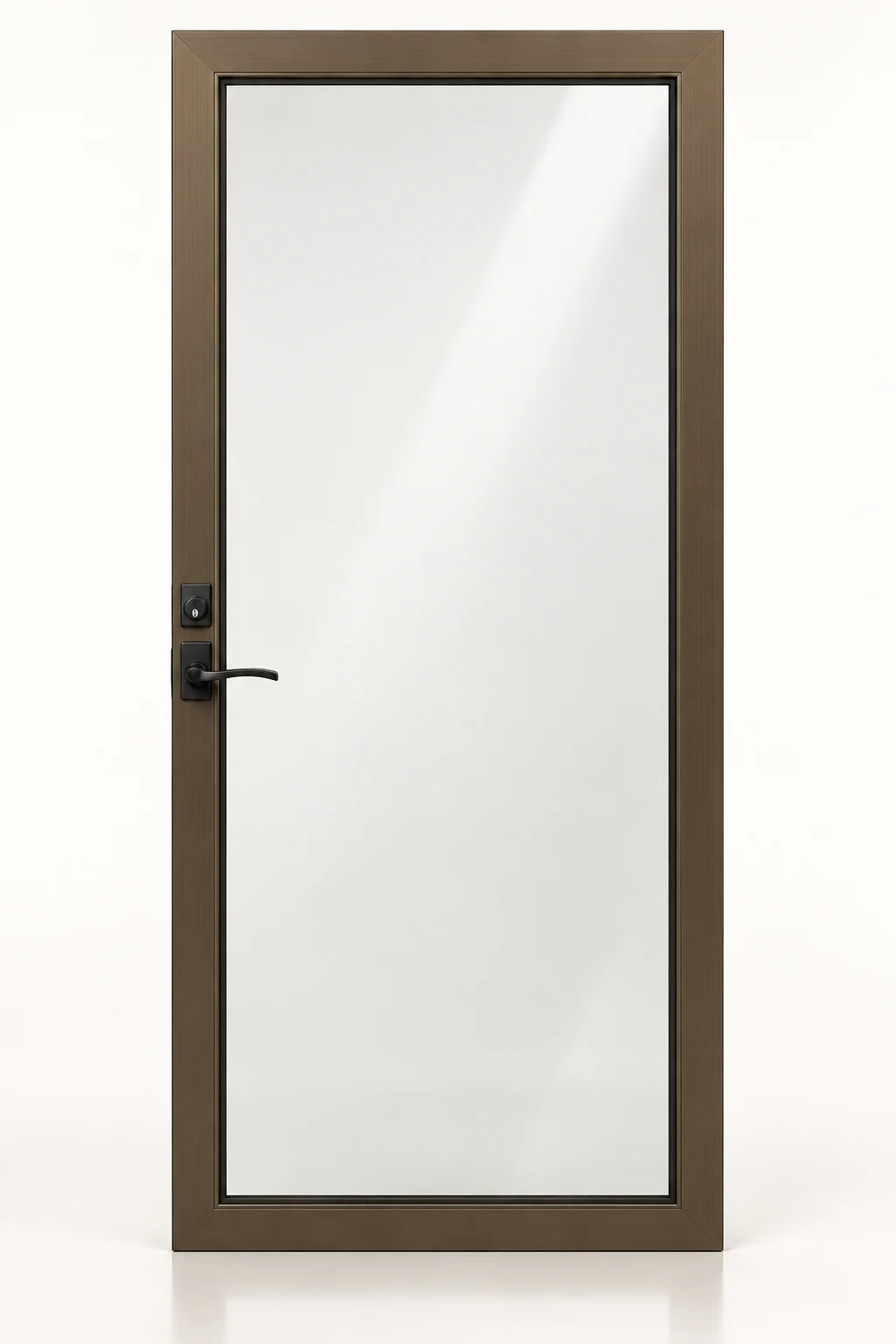
Series 810 · Four finishes
810 Insulated Fullview Aluminum Storm Door
Aluminum insulated fullview storm door with 5/8-inch fixed insulated glass. Black lever hardware and a deadbolt are included. Base doors are not pre-hung.
From $964.27
Standard size and included glass. Shipping and tax calculated at checkout.
Choose size & finish →