Storm-door buying guide · Reviewed September 16, 2026
Storm Door Glass: Tempered, Insulated, and Low-E
Understand the documented glass differences between 740 operating, 760 full-view, and 810 insulated storm doors before choosing a configuration.
Three glass specifications to compare
Glass thickness and construction are model-specific. The 740 operating door uses 1/8-inch clear tempered safety glass and a glass kickplate. The 760 full-view door uses 3/16-inch clear tempered fixed glass. The 810 full-view door uses a 5/8-inch fixed insulated glass unit. These descriptions are not interchangeable upgrades within one generic frame.
Choose the door family first, then ask about the permitted glass options for that family. The fixed construction of the 760 and 810 also matters: choosing a glass treatment does not add an operating screen or change a full-view model into a combination door.
Tempered glass and insulated glass describe different things
The 740 and 760 specifications explicitly identify their clear glass as tempered. Insulated glass describes a multi-pane glazing assembly, while Low-E describes a coating option. A request that simply says better glass leaves the actual construction unclear. Use the family number and the specific glass description in your request.
We do not publish unverified whole-door U-factors, solar heat gain coefficients, impact ratings, or safety certifications for these assemblies. If your project requires a tested rating or a particular code designation, provide that requirement so the exact model documentation can be checked before ordering. A product name alone is not a performance certificate.
Low-E and privacy requests
The 810 has separately reviewed Low-E and obscure/Low-E options. For the 740 and 760, obscure glass is a separate quote request. Ask which treatment is available on the selected model and which areas of the door it covers. Do not assume that a showroom photograph demonstrates the ordered privacy level.
If you want visibility through the upper door with less visibility through another panel, describe that goal clearly. The documented catalog does not automatically offer every glass pattern or panel combination. Any approved treatment should be written into the final configuration rather than left as a general note about privacy.
Consider the primary entry and its exposure
A secondary glass door changes the space in front of the primary entry. Review the primary-door manufacturer’s guidance for storm-door compatibility, especially where direct sun and a dark finish are involved. The suitability of the complete entry depends on more than the thickness of the outer glass.
Do not select Low-E solely on an assumed utility-bill reduction. Ask for the exact glazing package and any applicable performance information that is available for the selected assembly. This catalog supports comparing documented construction; it does not promise a percentage energy saving or a rebate qualification.
Replacing damaged glass is not the same as ordering a new door
For an existing door, send the model number, overall door photographs, and close views of the glazing retainers and identification labels. A nominal glass width and height do not establish the correct thickness, edge details, or insulated-unit construction. Have damaged glass assessed safely by a qualified service professional.
The online product pages describe complete door families. They do not establish universal replacement-glass compatibility or a stock of replacement inserts. A parts request should be reviewed separately before glass is fabricated or an existing frame is modified.
Common questions
Is Low-E included with the 810?
Low-E and obscure/Low-E are separately reviewed options. The base description is 5/8-inch fixed insulated glass.
Can I add insulated glass to any custom-size door?
Do not assume that. The insulated 810 is a distinct family with standard sizes only; the 740 and 760 have their own glass specifications.
Explore the door families
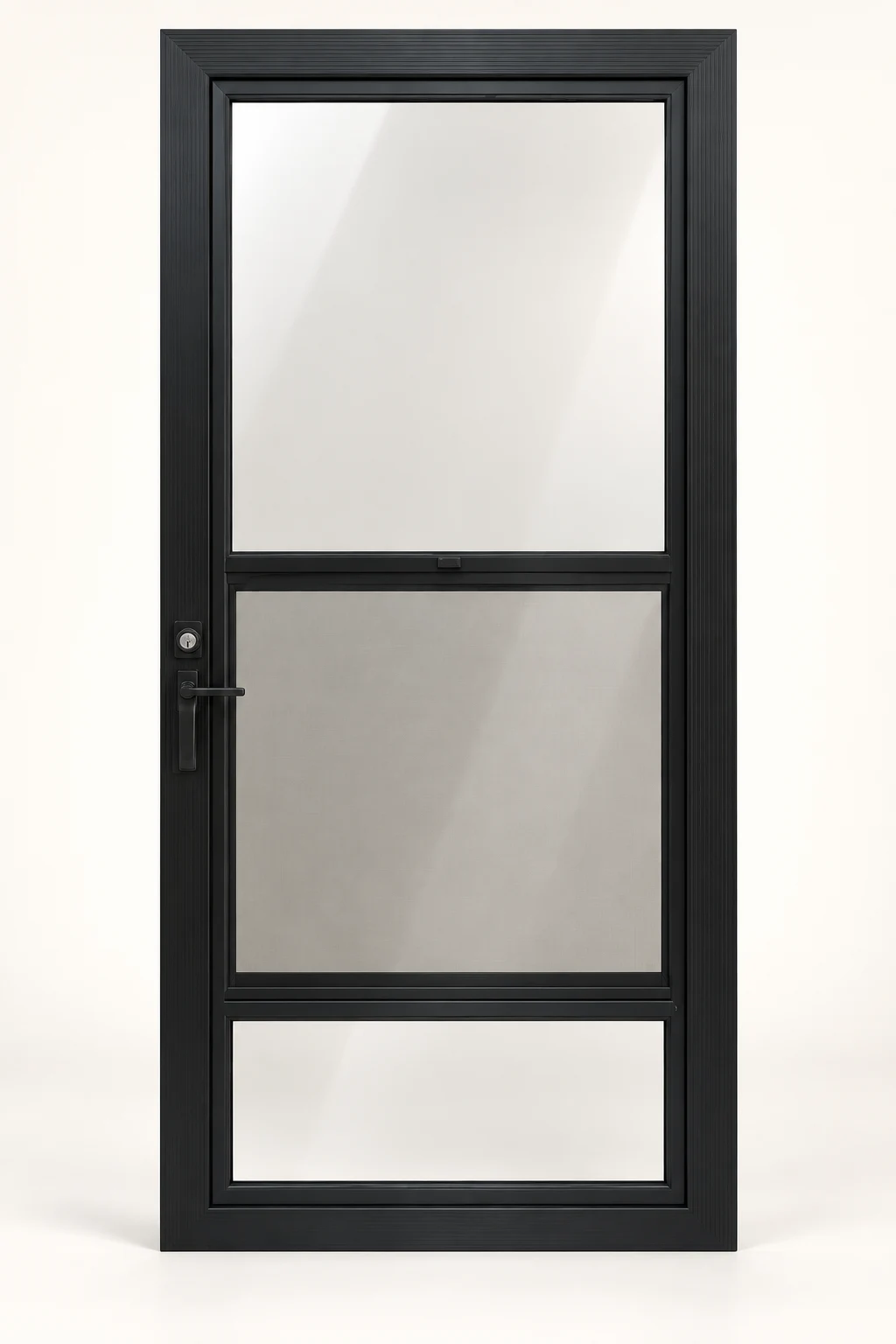
Series 740 · Four finishes
740 Operating Aluminum Storm Door
Aluminum operating storm door with 1/8-inch clear tempered safety glass and glass kickplate. Black lever hardware and a deadbolt are included. Base doors are not pre-hung.
From $766.01
Standard size and included glass. Shipping and tax calculated at checkout.
Choose size & finish →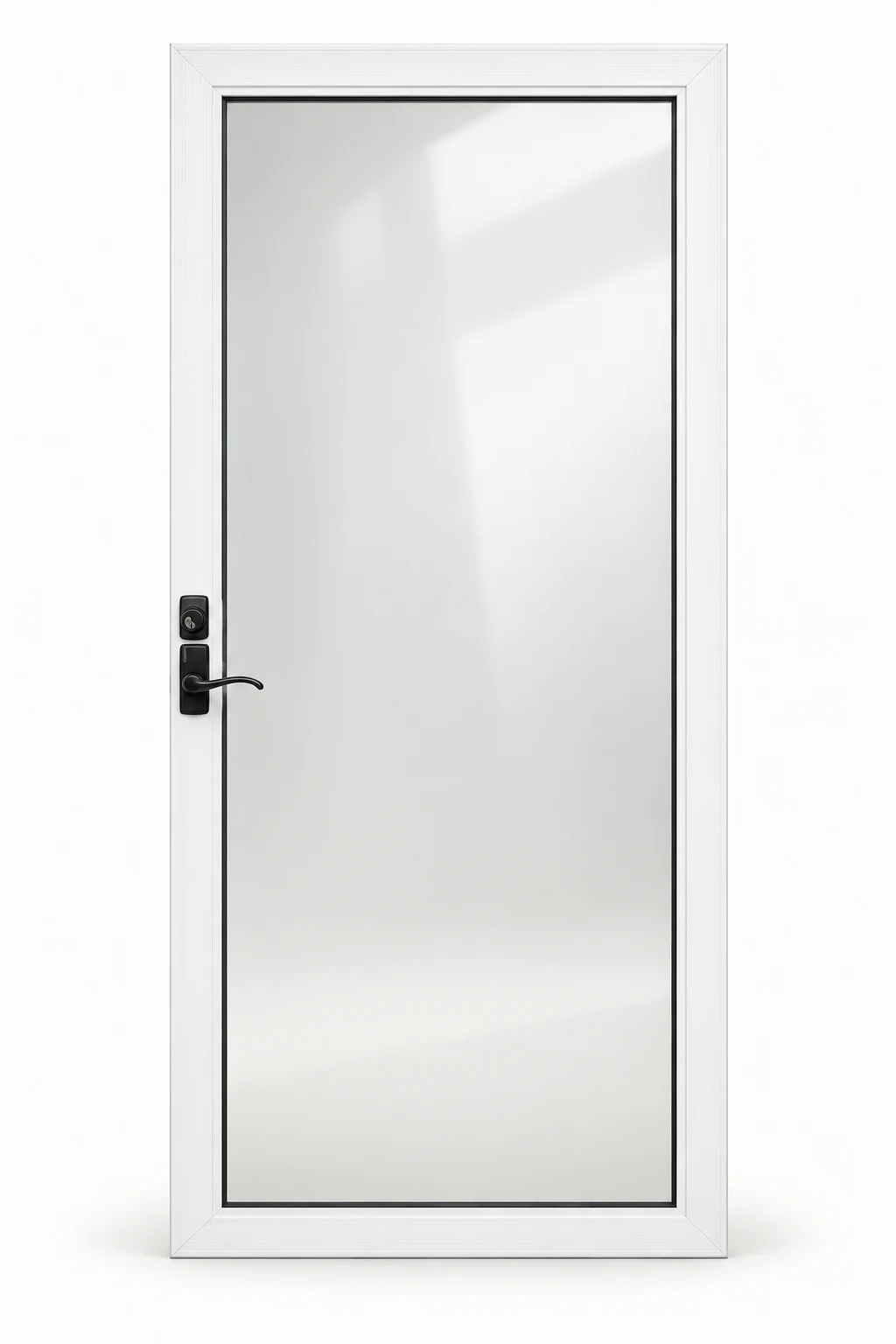
Series 760 · Four finishes
760 Fullview Aluminum Storm Door
Aluminum fullview storm door with 3/16-inch clear tempered fixed glass. Black lever hardware and a deadbolt are included. Base doors are not pre-hung.
From $648.86
Standard size and included glass. Shipping and tax calculated at checkout.
Choose size & finish →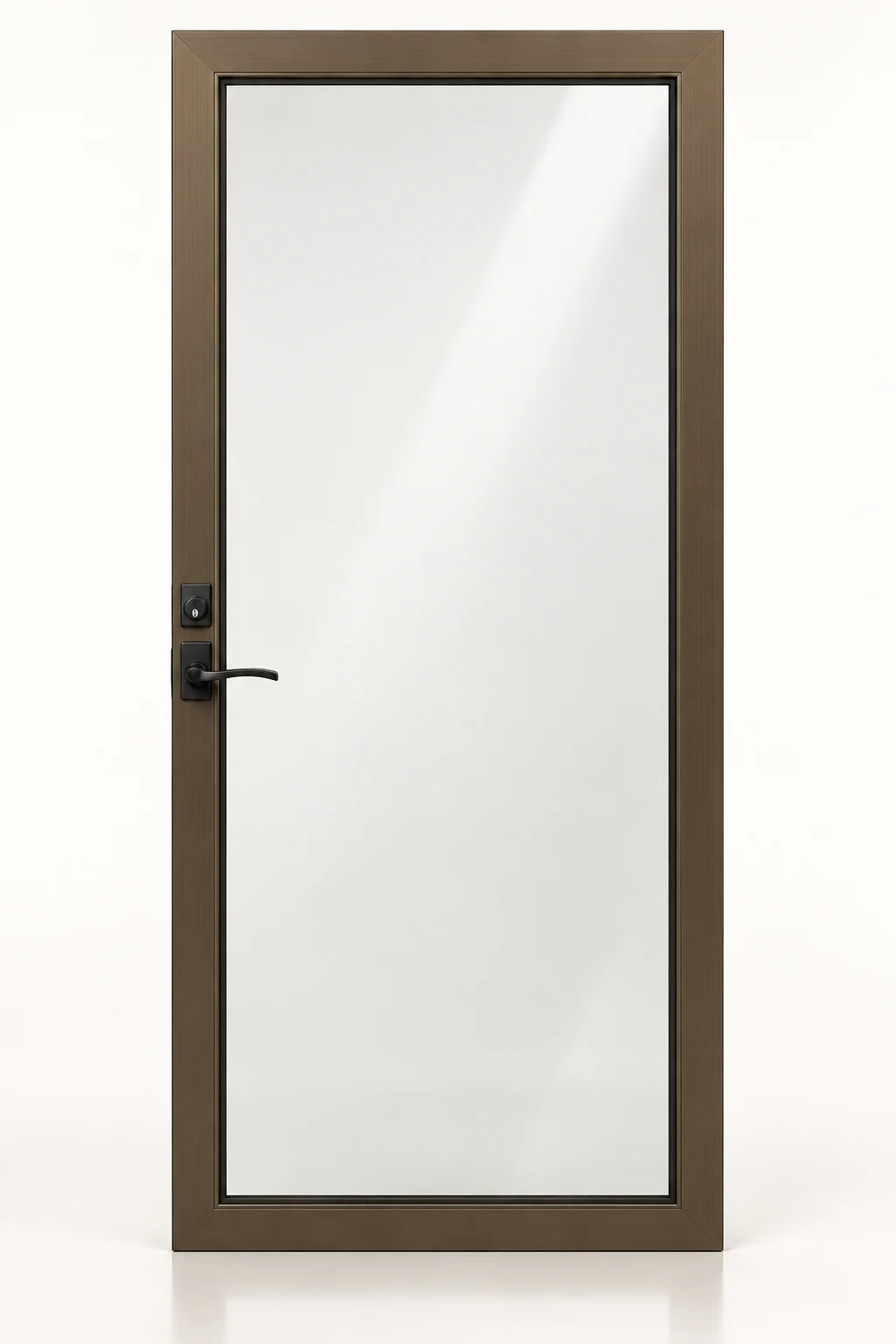
Series 810 · Four finishes
810 Insulated Fullview Aluminum Storm Door
Aluminum insulated fullview storm door with 5/8-inch fixed insulated glass. Black lever hardware and a deadbolt are included. Base doors are not pre-hung.
From $964.27
Standard size and included glass. Shipping and tax calculated at checkout.
Choose size & finish →