Wood storm window guide
How to Install and Finish Wood Storm Windows
A wood storm window closes against the blind stop, inside the exterior casing of your double-hung window. Installing one is mostly about fit and finish: test-fit it raw, trim if needed, finish every surface, then hang it and leave a path for condensation to escape.
Step by step
- 1
Check the crate on delivery
Inspect the crate with the driver present. If you see damage, note it on the delivery paperwork and take photos before you sign. Once the carrier leaves, the shipment is your responsibility.
- 2
Match each window to its opening
Use the labels on your order to match each storm to its room and opening. Keep them flat and supported until you install them.
- 3
Test-fit before finishing
Set the raw storm into the opening against the blind stop. Openings are rarely perfectly square and paint builds up over the years, so a snug spot may need light planing. Fix fit issues now, before primer or paint goes on.
- 4
Prime and paint or stain every surface
Your storm ships raw. Seal all six sides, including the top and bottom edges and end grain, with a quality exterior primer and paint or stain. Let it cure fully before installing.
- 5
Plan for condensation
Give moisture a way out. Either drill two 1/4 inch weep holes through the bottom rail, one near each side, or shorten the height by 1/16 inch and set small spacers at each side of the sill so air and water can escape.
- 6
Hang and fasten against the blind stop
Hang the storm from the top and close it against the blind stop. Secure it with your chosen storm window hardware, such as hangers with hooks and eyes or turn buttons, so it can come down for cleaning or seasonal changeover.
- 7
Check the finished installation
The storm should sit evenly against the blind stop, clear the sill, and line its center bar up with the meeting rail. Confirm the primary window still opens and locks.
Where the storm window sits
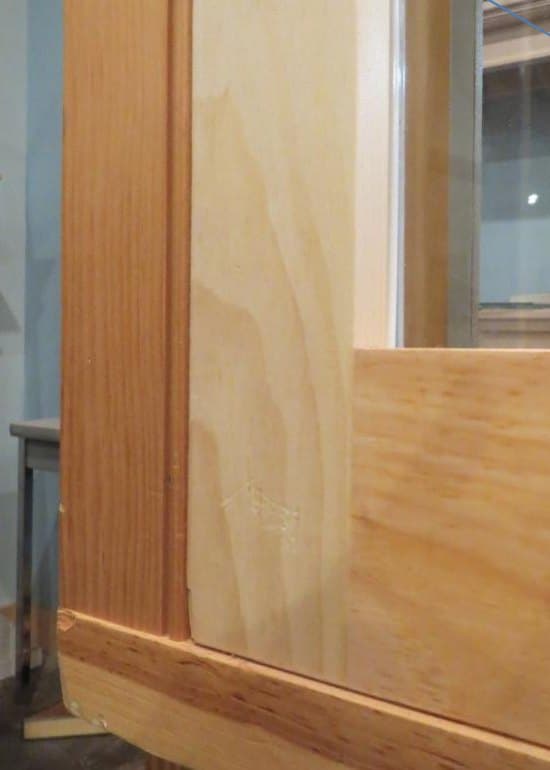
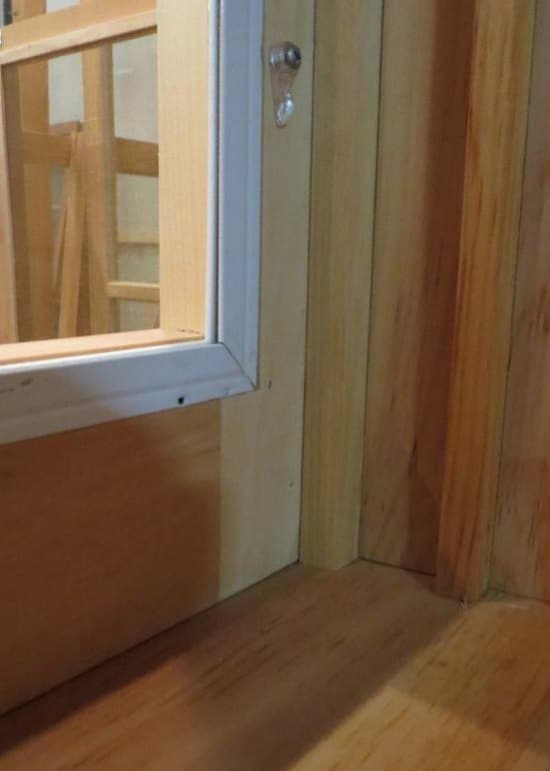
These photos show a wood storm window in place against the blind stop, from inside and outside. The storm fills the opening between the exterior casings and closes against that narrow strip.
Seasonal care
Traditional storms can come down each spring for cleaning and storage, while combination and self-storing models stay up year round and switch between glass and screen. Keep the paint film intact and touch up bare wood as soon as you see it. Clear the weep holes or spacer gap each fall.
Frequently asked questions
Is installation hardware included?
Hanging hardware is confirmed with your written quote. Many homeowners reuse existing storm window hangers where they are sound.
Should I install it before or after painting?
Test-fit first, then finish, then install. Painting before the test-fit can hide a spot that needs light planing.
Why do I need weep holes?
Moisture can collect between the storm and your primary window. Weep holes or a small spacer gap at the sill let it escape so the sill and sash stay dry.
Do you install?
Our products are sold for installation by you or your contractor. Tell us your ZIP and we can help you plan the project.
Wood storm windows covered by this guide
Ready to price your windows?
Enter your width and height on the Traditional Wood Storm Window for an instant price, or send measurements for any style.