From the blog
Old Aluminum Storm Windows: Maintain, Restore, or Replace?
Learn how to inspect old aluminum storm windows and decide whether maintenance, restoration, or replacement is the best option.
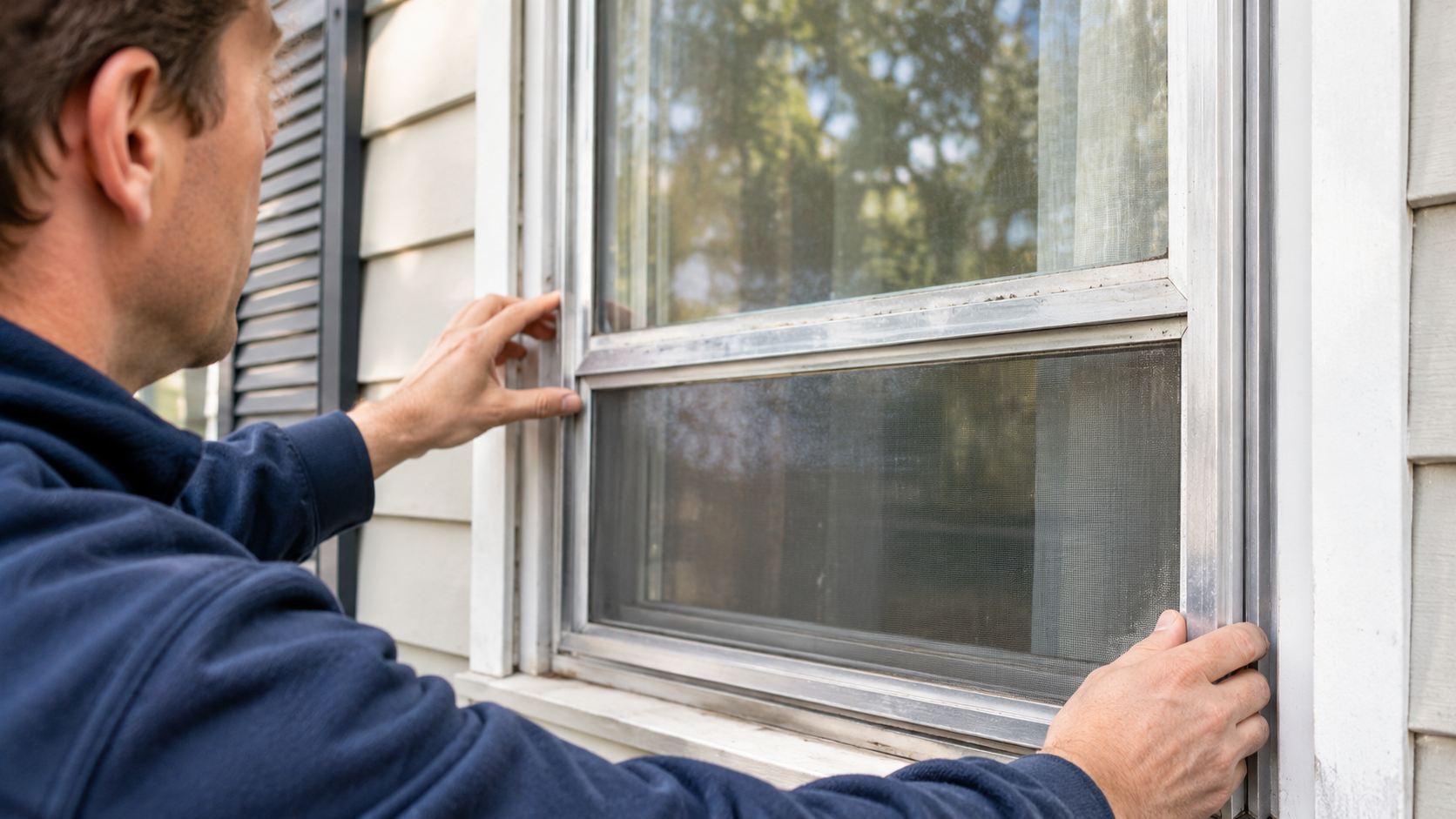
Keep an old aluminum storm window when the frame is square and its panels work. A sound unit may be worth restoring when the trouble is limited to its finish, alignment, weatherstripping, hardware, or glazing. Replacement makes more sense when reasonable maintenance or repair cannot make the storm window safe, secure, operable, drainable, and properly fitted.
The storm window is a separate layer inside or outside the primary window. One failed storm does not condemn the primary window. An aluminum storm window maintenance decision starts with the frame, fit, glass, screens, tracks, hardware, seals, drainage openings, finish, and safe access.
Key Takeaways: Old Aluminum Storm Windows
- Maintain a square, operable storm window for cleaning or minor parts, restore a sound frame for finish, alignment, glazing, or weatherstripping work, and replace a unit that remains unsafe, distorted, deeply corroded, poorly fitted, or inoperable.
- Stop DIY work for cracked glass, unsafe access, suspected lead paint, unknown glazing compounds, serious frame distortion, or other conditions that need qualified window, glass, lead-safe, or preservation help.
- Judge each opening by condition and function, not age alone, since light oxidation may need only maintenance but combined fit, drainage, hardware, and glazing failures can justify restoration or replacement.
- When maintenance cannot correct a bent, severely corroded, incomplete, or poorly fitting storm frame, Storm Windows USA offers made-to-measure aluminum storm windows with configuration and measuring choices that help you specify the failed storm layer separately from the primary window.
Start With a Five-Minute Condition Check
Inspect the whole assembly before cleaning, forcing a panel, or ordering parts. Treat the master frame, removable glass and screen panels, tracks, latches, fasteners, weatherstripping, sill, and weep openings as one system.
For old triple-track aluminum storm windows and other removable-panel units, take one straight-on photo before anything moves, then capture close-ups of labels, track layout, panel order, corrosion, cracks, gaps, worn contact points, and anything that binds. Note whether the frame looks square and whether every moving part travels and latches without unusual pressure. National Park Service guidance on historic aluminum windows shows why this whole-assembly check matters, since dirt, corrosion, broken hardware, failed glazing material, and misalignment can show up together.
Now sort the window into one of three groups. A serviceable unit needs maintenance, and a sound frame with a finish, glazing, alignment, or component problem may merit restoration. A distorted, unsafe, deeply deteriorated, or badly fitting assembly is a replacement candidate. Do not assume the dimensions on an old sash or frame match what a new product guide asks you to measure.
Maintain Old Aluminum Storm Windows When the Assembly Still Works
Routine care is right for an assembly that stays square, secure, operable, and able to drain. Age, a dull finish, or light surface oxidation alone does not prove failure.
Clean first, then look again. Grit in a track can mimic a hardware failure, and blocked drainage can trap moisture where it should not sit. Maintenance can preserve operation and expose damage, but it cannot straighten a bent master frame, replace unavailable structural pieces, or turn an older clear-glass unit into a certified modern product.
How to Clean Aluminum Storm Windows, Tracks, Screens, and Weep Holes
Start with loose, dry debris and the gentlest cleaner that suits the material. The National Park Service recommends mild soaps or detergents as a starting point, followed by testing, a thorough rinse, and drying. Aggressive products can trade a dull finish for permanent damage.
Photograph and label removable panels before moving them. Vacuum accessible tracks, clean the glazing and screens with compatible products, wipe the aluminum, and dry the tracks. Clear visible drainage openings without enlarging or sealing them, because PNNL identifies exterior weep holes and notches as drainage paths that should stay open.
For a fuller panel-by-panel routine, use the Storm Windows USA guide on how to clean storm windows. Lubricants are less universal than they look. Follow the instructions for the exact hardware and track material instead of spraying a general-purpose product into the assembly.
Fix Minor Hardware, Screen, and Weatherstripping Problems
A small, identifiable component problem can justify repair when the frame and glazing remain sound. Torn screen mesh, worn spline, loose accessible fasteners, and a known latch or roller may be manageable once you identify the model and part.
When shopping for storm window parts, part availability is the catch. Storm Windows USA says replacement glass, screens, and other components depend on the original model and order, so collect the order number and clear photos before buying anything. Weatherstripping must match the original design. It should not hide distortion or force a misaligned sash closed.
Restore Old Aluminum Storm Windows When the Frame Is Sound
Restoration targets a serviceable assembly that needs more than routine cleaning and a few quick touch-ups. It is most defensible when the frame can be aligned, the metal is not deeply pitted or separating, and work on the finish, glazing, weatherstripping, or hardware can preserve useful function or important character.
Ask a qualified provider to define the repair scope, available parts, glass work, finish treatment, and alignment work. Compare that scope with a made-to-measure storm replacement. A universal age, percentage, or dollar cutoff would be misleading because access, condition, missing parts, glass, and preservation needs change from one opening to the next.
Treat Aluminum Window Oxidation and Worn Finishes With the Gentlest Effective Method
Identify and test a worn or oxidized finish before reaching for stronger cleaners, abrasives, coatings, or paint. Aluminum is soft, and its finishes react differently.
The aim is to remove harmful deposits without erasing sound material or damaging the finish. White oxidation that responds to gentle cleaning is different from deep pitting, flaking layers, or surface separation. Leave etching cleaners, powered abrasives, lacquer, wax, and repainting to someone who can identify the finish, protect nearby glass and trim, and test a small area first.
Know Which Repairs Belong With a Window or Glass Professional
Do not attempt repairs to aluminum storm windows yourself when they have cracked glazing, failed glazing material, distorted frames, deep corrosion, missing retainers, unsafe upper-story access, or uncertain old coatings. Send those conditions to a qualified window, glass, lead-safe, or preservation professional because a cleaning guide cannot settle the breakage, fall, material, and fit risks.
EPA advises owners of pre-1978 homes to use lead-safe practices and recommends certified lead-safe contractors when renovation, repair, or painting will disturb old paint. Historic aluminum-window guidance warns that later paint can contain lead and that some older glazing compounds can contain asbestos. Do not sand, scrape, or dismantle uncertain material.
The guide on how to remove storm windows safely can help you identify a sash, screen, or master frame and recognize model-specific release hardware. Use it as handling context, not as a repair promise. Storm Windows USA does not claim to restore old units or assess site conditions.
Replace Old Aluminum Storm Windows When Damage or Poor Fit Compromises the Assembly
Replace the storm assembly when reasonable maintenance or targeted repair cannot make it safe, square, secure, operable, drainable, and properly fitted. Condition and function matter far more than a fixed age.
Look for failures that interact. A distorted frame, deep pitting, separating metal, unsafe glazing, repeated binding, missing critical hardware, unavailable parts, damaged drainage details, and persistent fit gaps all belong in the decision. A draft, condensation, or high utility bill proves little by itself, since the primary window, sill, installation, indoor humidity, or leakage elsewhere may be involved.
Signs Storm Window Replacement Is the Better Choice
Replacement is stronger when several core functions fail, or when one failure makes the assembly unsafe. Check each opening on its own before writing off a full set because one latch is bad or one track is dirty.
- The frame is bent, badly out of square, deeply pitted, or separating where joints and material layers should remain sound.
- The glass is cracked or insecure, with no practical path to safe, compatible restoration.
- Critical latches, retainers, rollers, or panels are missing, and the original model cannot be matched to verified replacement parts.
- Panels still bind, rattle, gap, or fail to latch after qualified adjustment.
- Drainage cannot be restored, the sill is damaged, or poor fit keeps sending water where it should not go after the obvious debris is cleared.
Compare the repair scope with the operation you want, screen behavior, access, and sightlines. PNNL recommends checking the primary window and sill before adding an exterior storm, then matching the storm configuration to the way the original window opens. Structural decay or concealed water damage needs local assessment before you choose a product.
Replace the Storm Unit, Not Automatically the Primary Window
When deciding how to improve aluminum storm windows, evaluate each failed storm layer separately from the primary window. Check the primary window separately for framing, sill, glazing, operation, and water damage.
Here, Storm Windows USA acts as an online seller and selection resource rather than the repair contractor or site inspector. Its aluminum range includes made-to-measure interior and exterior options in fixed and operating configurations. The useful method is to choose placement, operation, track and screen layout, glazing, finish, and mounting approach before measuring with the matching product guide. That sequence gives you an opening-specific specification for comparing options without treating the primary window as part of the order. Accurate measurements and final model confirmation still control fit, and difficult access or damaged surrounds need local assessment.
Compare Replacement Configurations Before You Order
Match the replacement storm's operation, track arrangement, screen, glazing, mounting method, and sightlines to the primary window and the room. Ventilating two-track and triple-track storm windows add tracks and moving parts. A fixed unit is simpler, but it does not provide storm-window ventilation.
Confirm the exact model instead of leaning on a broad category name, which can hide important differences in the available build. Dimensions, panel movement, screen layout, finish, glass, certification, cleaning access, and mounting requirements can differ within the same configuration.
Two-Track vs. Triple-Track Storm Windows
Two-track windows place glass and screen components in two channels. Triple-track windows give two glass sashes and a screen their own channels. Match vertical or horizontal movement to the primary opening, then decide how independently you need the glass and screen to move.
Compare current two-track storm windows when a compact arrangement fits the opening and ventilation plan. Look at triple-track storm windows when separate glass and screen channels give you the independent operation you need for daily use. Check the individual product, since legacy release methods and modern panel layouts are not universal.
Fixed, Picture, and Specialty Units
Fixed units fit openings that do not need storm-window ventilation. Specialty shapes need extra measurements, straight-on photographs, close-ups of the mounting surface, and a feasibility review before anyone orders. Larger or unusual panels demand a closer look at handling, support, glass, and mounting.
Do not assume one oversized pane can safely cover a group of windows. Confirm the shape, mounting surface, access, glass limits, clearances, and support points with the selected product source before ordering.
Low-E Glass, Screens, Colors, and Historic Sightlines
Choose glass, screens, finish, and frame profile for the real use case and a verified model. ENERGY STAR certification applies to specific low-e storm-window products, so check the model and climate-zone listing before treating certification as a category-wide feature.
A screen matters only when the storm configuration and room use call for ventilation. Finish and meeting-rail location change how the new layer looks against the primary window. Where historic character matters, compare frame width, divisions, color, and sightlines before ordering, but do not assume every older home has a formal preservation requirement.
Measure the Opening, Not the Old Frame
Choose the product and mounting method before measuring. Do not copy an old sash label or frame size straight into a new order form. Each system defines its own order dimensions.
Storm Windows USA's guide on how to measure for storm windows calls for several width and height readings, exact recording, and no general allowance deduction. Use the smallest reading where the selected guide says to, note meeting rails and clearances, and send straight-on and detail photos when the opening is uneven or unfamiliar.
Approximate dimensions can start a product conversation. Custom production still needs exact, confirmed measurements and options. That boundary lets you get help narrowing the configuration without pretending that incomplete measurements guarantee a fit.
Use This Maintain, Restore, or Replace Checklist
Use the condition of each opening to choose its next step. Different windows can land in different categories, even on the same house.
- Maintain the unit when its frame is square, glazing is secure, panels travel normally, latches work, drainage is open, and the problems are dirt or routine wear.
- Restore the unit when its frame is sound, but the finish, alignment, glazing, screen, weatherstripping, or identifiable hardware needs skilled attention.
- Replace the unit when it is unsafe, distorted, deeply corroded, poorly fitted, unrepairable, or missing critical parts that cannot be sourced.
- Stop and get help when glass is broken, access is unsafe, old paint or glazing material is uncertain, water damage may be concealed, or the primary window and sill need assessment.
Give Old Aluminum Storm Windows a Clear Next Step
Maintain, restore, or replace old aluminum storm windows according to the assembly's condition and function. Maintain a working assembly, including keeping storm window weep holes open where the model uses them. Consider restoration for a sound but neglected unit, and replace a failed storm layer without assuming the primary window must go too.
When inspection points to replacement, compare Storm Windows USA's replacement storm-window options by interior or exterior placement, operation, track layout, finish, and glazing. Use the collection to narrow the product, then send opening specifications for options and pricing. Choose the mounting approach first and follow the matching measuring guide before placing an order. Local window, glass, lead-safe, or preservation professionals should handle repair work and site-specific conditions.