From the blog
How to Clean Storm Windows: Glass, Screens, Frames, and Tracks
Learn how to clean storm windows, including glass, screens, frames, and tracks, with safe removal, streak-free cleaning, and reinstallation tips.
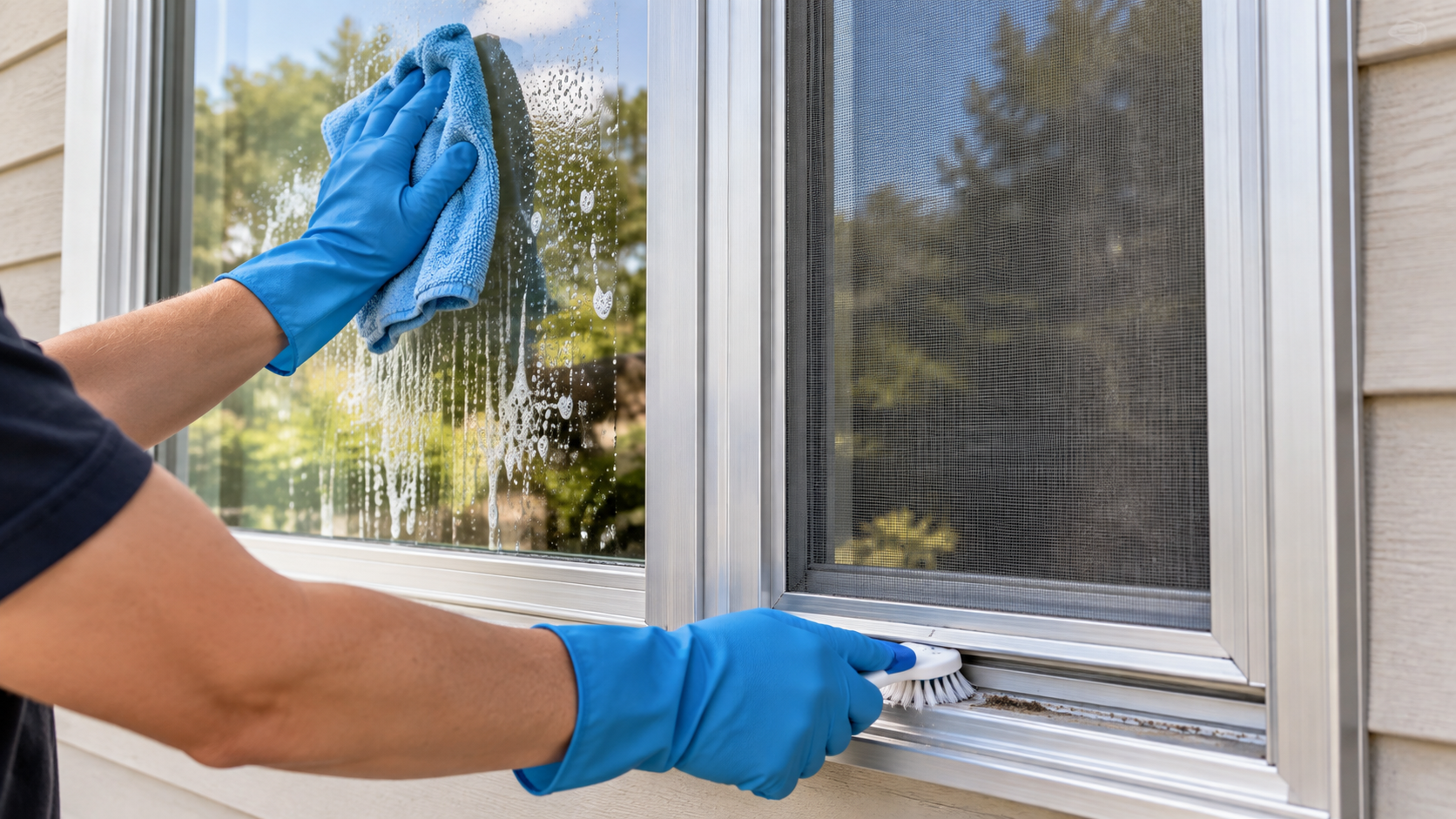
To learn how to clean storm windows safely, vacuum or brush away dry dirt first. Wash compatible surfaces with a mild solution, dry every part, and return each panel to its original track and orientation. This dry-to-wet order keeps grit from turning into mud.
Learning how to clean windows with storm windows means covering the glass, screens, aluminum frames, tracks, and the gap between the primary window and the separate storm. Release tabs, clips, coatings, and panel order differ by product, so check the manufacturer's instructions before forcing, removing, or treating anything.
Before You Start: Identify Your Storm Window and Choose Safe Conditions
Before grabbing the bucket, identify the moving parts. Fixed storm windows may be screwed or clipped in place. Two-track units often pair one movable glass sash with a screen. Triple-track units can place two glass sashes and a screen in separate channels. Interior inserts and sealed insulated glass need a different approach.
Pick a cool, overcast day so cleaner doesn't flash-dry on the glass. Stop if a panel is too heavy, the glass is cracked, or reaching it safely would mean leaning from a ladder. Take a photo of each opening, label the panels by room or window, and set up a padded surface before removing anything.
To understand how to clean old windows with storm windows, protect the sill, nearby woodwork, and floor with towels. If the house has old painted storm sash, avoid scraping or sanding unknown coatings. Avoid disturbing a fragile finish or turning a maintenance job into a repair.
Gather the Right Tools and Cleaning Solution
Gather these supplies before you start.
- Bucket, clean water, and mild dish soap
- Microfiber cloths, a soft sponge, and a soft-bristle brush
- Vacuum with a brush attachment
- Rubber squeegee and towels
- Painter's tape and a marker for labels
Keep every tool clean. One gritty cloth can scratch glass or a finished frame.
Mild soapy water is a practical starting point for ordinary glass and many washable frames, but the product instructions come first. Confirm compatibility before using vinegar, alcohol, ammonia, or a specialty cleaner near low-e coatings, painted finishes, weatherstripping, seals, acrylic, or adjacent wood trim.
How to Clean Storm Windows Step by Step
For how to clean storm door windows, use the same sequence and check the door hardware instructions.
- Document the assembly.
- Remove only the panels that need to come out.
- Vacuum loose debris.
- Wash the glass and screens.
- Wipe the frame and tracks.
- Let every part dry before reinstallation.
Label Panels and Remove Screens or Glass Only When Needed
Photograph the clips, latches, panel orientation, and track order, then label every removable piece. For several similar windows, add the room and opening number so the clean panels remain easy to match.
Open or release one component at a time using the product's normal controls. Some sashes tilt inward or lift out. Fixed panels may use screws, brackets, compression channels, or turn buttons. Never pry against the glass, twist a thin screen frame, or force a latch that resists normal release.
Our lineup includes two-track storm windows, but removal steps still vary by exact model and configuration. Use the instructions supplied for your unit, especially when a fixed panel, specialty glass, or older hardware blocks access.
Dry-Clean Frames, Tracks, and Loose Debris First
Start at the top and work down. If you are learning how to remove storm windows for cleaning, consult the product instructions before release. Use a soft brush or vacuum attachment to collect dust, pollen, insects, cobwebs, and grit from the frame, corners, tracks, and sill. Keep the hard edge of the vacuum nozzle away from painted or factory-finished surfaces.
Water turns leftover debris into gritty mud. Vacuuming first keeps that grit off the glass and out of rollers, balance channels, joints, and drainage paths. Lift larger particles out instead of dragging them down the track.
Wash and Dry the Glass Without Streaks
Wet the glass with mild soapy water and a soft sponge or microfiber applicator. Work in manageable sections, starting at the top. For a squeegee finish, make controlled overlapping passes and wipe the blade with a clean cloth after each one.
Try horizontal strokes on one side of the glass and vertical strokes on the other. A leftover streak then points to the surface that needs another pass. Dry the edges, gaskets, frame, and nearby trim before runoff sits against seals or wood.
For streak-free storm window cleaning, Marvin's window-washing guidance recommends cleaning in shade, removing dry dirt before wet washing, and checking whether treated glazing needs special care. If your glass has a low-e coating or another surface treatment, follow that product's approved cleaner list instead of relying on a universal recipe.
Does Track Design Change How You Clean a Storm Window?
Track design changes which panels you can reach and the order in which they move. Storm Windows USA's two-track exterior units pair a glass sash with a screen, so clean each accessible face as you reposition the panels. Its triple-track storm windows use two glass sashes and a screen in separate channels. Photograph the order first, move one panel at a time, and keep each sash in its original channel.
Clean Screens Without Stretching the Mesh
Support a screen frame with both hands and place a removable screen flat or securely upright. Brush away loose material gently. Wash the mesh and frame with mild soapy water using a soft brush or cloth, then rinse with a low, controlled flow of clean water.
To clean storm window screens without stretching them, follow Andersen's insect-screen care instructions: use a soft-bristle brush, mild soapy water, a clean-water rinse, and complete drying of the frame. Avoid pressure washing or aggressive scrubbing, which can stretch mesh, loosen spline, or bend a light frame.
Let screens dry completely before reinstalling them. Pause for repair if you find torn mesh, failed spline, a bent frame, or broken clips. If you are comparing replacement options, review storm windows with screens by configuration rather than assuming every screen releases the same way.
Clean Aluminum Frames, Tracks, and Weep Holes
Once the loose dirt is gone, wipe aluminum frames with clear water or a mild, compatible soap solution. Test a hidden spot first. Use a soft cloth or brush, keep runoff under control, and skip abrasive pads or strong chemicals that can dull or discolor the finish.
Clean tracks in short sections before deciding how to clean old aluminum storm windows. Use a lightly damp cloth or cloth-wrapped, non-scratching tool, and direct dirty solution away from wall joints, balance channels, and hidden cavities. Lubrication is product-specific, so add oil or a general-purpose spray only when the manufacturer calls for it.
Clear only visible drainage openings with a soft brush. Preserve the original weep-hole shape and location. Leave slots at their original size, and keep wire or sharp tools out of concealed passages.
Let Every Part Dry, Then Reinstall It in Order
Dry glass edges, screens, seals, tracks, and frames before reassembly. Return every labeled panel to the same opening, orientation, and track shown in your photos. Seat clips and latches with normal hand pressure rather than forcing them.
Move operating panels through their normal travel. They should move smoothly, meet evenly, and leave drainage openings clear. Stop if a panel binds, rattles unexpectedly, sits crooked, or requires pressure to close.
How to Clean Storm Windows Without Removing Them
You can clean many storm windows without full removal if the tracks are designed to expose one surface at a time. Move or tilt an accessible panel, clean the exposed glass, then reposition it to reach the next area. A narrow vacuum tool, soft detailing brush, and lightly damp microfiber cloth can handle designed access gaps. Support the sash through its range and work from the room side when possible.
Vacuum first. Sliding dirty panels back and forth can drag grit over the finish or pack it around rollers and corners. Keep tools shallow and visible. Avoid pushing them behind seals.
A fixed panel or delicate coating is your cue to stop, especially if the only way forward is overreaching from a ladder. Leave an inaccessible area alone rather than risk cracked glass, a bent frame, or a torn seal.
Cleaning Between Storm Windows
How to clean between storm windows: open, tilt, or remove the separate storm component only as designed. Clean the primary glass, both accessible faces of the storm panel, the sill, and the tracks as separate surfaces. Dry the entire cavity before closing it.
Sealed double-pane or triple-pane glass is different. Fog, residue, or droplets trapped inside the sealed unit sit beyond the reach of surface cleaning from either side. Persistent moisture may indicate a failed seal that needs evaluation or replacement. A professional evaluation is the useful next step.
With storm windows for old houses, stop if paint, corrosion, loose glazing, swollen wood, or brittle hardware prevents normal access. Avoid unplanned disassembly during a cleaning task.
When Is Cleaning No Longer Enough?
Cleaning is no longer enough for cracked glass, bent frames, or failed hardware. Storm Windows USA builds custom exterior aluminum storm windows for damaged openings. For homeowners asking how to clean double pane storm windows because moisture is trapped inside a sealed unit, seek evaluation instead of using more cleaner. Surface cleaning cannot reach moisture sealed between insulated panes, regardless of cleaner choice. Before replacing anything, measure the opening, then compare fixed, two-track, or triple-track designs based on ventilation and screen needs.
Products and Tools to Avoid on Storm Windows
Skip razor blades, metal scrapers, abrasive powders, stiff pads, harsh solvents, and pressure washers. These can scratch glass, damage coatings, mark aluminum finishes, disturb seals, or drive water into places that are difficult to dry.
Keep tracks, wood trim, glazing joints, and weatherstripping only lightly damp. Match the cleaner to the glass coating, frame finish, screen material, and manufacturer instructions. Extra chemical strength and pressure rarely improve the result.
Is Dish Soap Safe for Storm Window Glass?
Use mild dish soap in clean water when the manufacturer permits it. How to clean inside storm windows is straightforward when the glass is reachable: rinse or wipe with clean water, and dry right away. Dry the reachable edges before closing the sash or panel.
Test the solution on a hidden section of the frame first. Keep it away from any surface with product-specific restrictions.
Should You Use Vinegar or Commercial Window Cleaner?
Vinegar may help loosen some mineral film, but compatibility varies across coatings, finishes, seals, acrylic panels, and nearby materials. A commercial cleaner presents the same compatibility question.
For treated glass, check the care instructions and choose an ammonia-free or manufacturer-approved product. Clean tools, controlled moisture, and quick drying do more useful work than an aggressive formula.
Keep Storm Windows Cleaner and Know When to Stop
Let exposure and condition set the schedule. A window under a deep protective eave may stay tidy longer than one facing a busy road. How to clean between old storm windows depends on whether paint, corrosion, or brittle hardware blocks access. While parts are accessible, check the screens, spline, seals, clips, corners, drainage openings, and panel movement. Clean before grit packs into the tracks.
Stop and seek repair help for cracked glass, bent frames, loose glazing, failed seals, heavy corrosion, broken hardware, unsafe height, or panels that resist normal release. Structural damage, failed insulated-glass seals, and other storm window replacement needs require qualified help rather than cleaning.
Keep Storm Windows Clean With the Right Routine
A careful routine makes reassembly easier. Keep each panel tied to its original opening, use compatible cleaners, and let every surface dry. This method helps reduce streaks, scratches, and reassembly problems.
After you learn how to clean storm windows, compare custom storm window options when a bent frame, torn screen, or poor fit remains. Structural damage needs repair because no cleaner, including a storm window cleaning solution, can correct it.